
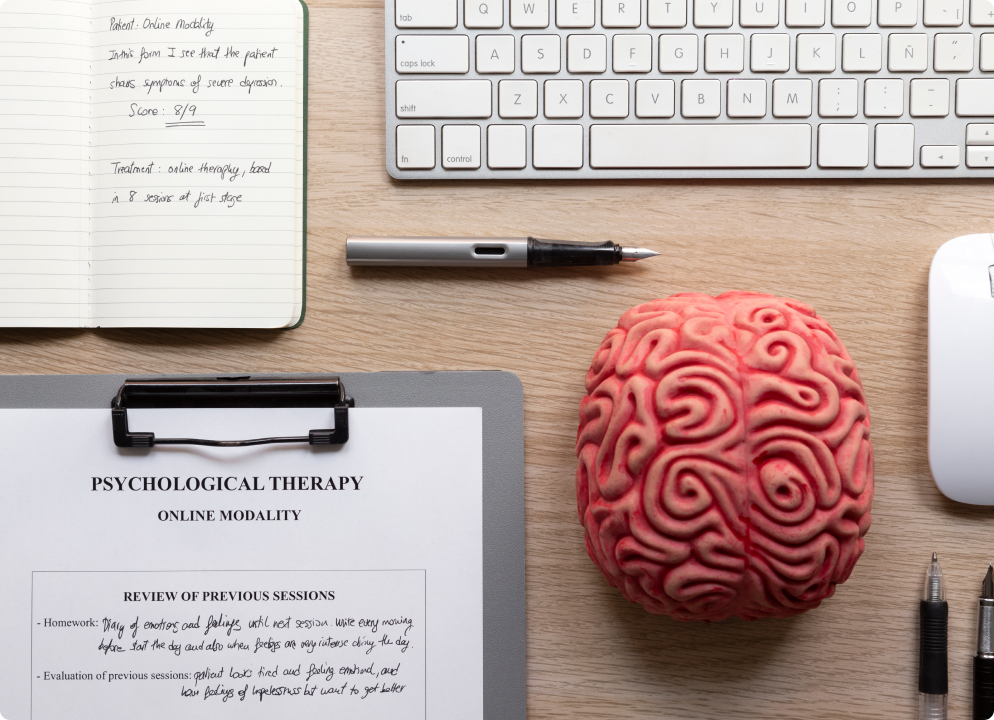
Neuropsychological Evaluations
These evaluations typically assess the following: intellectual capacity (IQ), attention, memory, reasoning, impulsivity, sensory and motor skills; perception, executive functions; anxiety and mood; reading, mathematics, and written language skills. These evaluations help clarify cognitive deficits due to learning disabilities, such as reading, writing and language disorders, head injuries, neurological or psychological conditions that affect thinking and behavior and provide the information necessarily to make a proper diagnosis.
A psychoeducational evaluation is similar to a neuropsychological evaluation only less comprehensive. Sometimes the difference is semantic. The most important thing is for an evaluator to use the proper assessment tools necessary to answer the reason for referral, make a diagnosis, clarify what the problems is, and make appropriate recommendations.
The most common disabilities identified by neuropsychological evaluations include:
Attention deficit disorder, dyslexia, dysgraphia, dyspraxia, mathematics related disorders, communication disorders, ASD, anxiety related disorders, mood related disorders.
A good psychologist should know how to differentiate for example, anxiety from attention deficit, a language disorder from a spectrum disorder and a learning disability from educational gaps.
A psychoeducational evaluation is similar to a neuropsychological evaluation only less comprehensive. Sometimes the difference is semantic. The most important thing is for an evaluator to use the proper assessment tools necessary to answer the reason for referral, make a diagnosis, clarify what the problems is, and make appropriate recommendations.
The most common disabilities identified by neuropsychological evaluations include:
Attention deficit disorder, dyslexia, dysgraphia, dyspraxia, mathematics related disorders, communication disorders, ASD, anxiety related disorders, mood related disorders.
A good psychologist should know how to differentiate for example, anxiety from attention deficit, a language disorder from a spectrum disorder and a learning disability from educational gaps.
Psychoeducational Testing
Briefer, more focused evaluations for children and young adults to provide information for educational planning and placement, career planning, and testing accommodations. These evaluations include:
- Assessment of intelligence (IQ testing), a learning evaluation, and some personality assessment.
- For the purpose of diagnosing learning disabilities, in reading, writing and math, adaptive skills and behavioral disorders.
- Individualized recommendations regarding school placement (special school, self contained class, resource room, related services) for school support plans (IEPs/504s).
- Guidance for educators and families.
Testing Accommodations
Comprehensive documentation to support application for accommodations on standardized tests for students with disabilities.
- Assessments tailored to the requirements of the respective testing board (SAT, ACT, GRE, GMAT, LSAT, USMLE, IELTS, TOEFL and others.
- Diagnostic reports aligned with ADA and DSM standards.
- Detailed recommendations regarding extended time, breaks, and other supports.
- Liaison with university learning centers, schools, test preparation centers as necessary.
Low-Incidence Disabilities
Specialized testing for individuals with visual, auditory, or language impairments. Evaluations are adapted to ensure accuracy and accessibility.
- Evaluations for students with visual, auditory, and language impairment, utilzing specialized assessment tools or standard tools with modifications to ensure accuracy and accessibility.
- Collaboration with multidisciplinary providers (SLPs, audiologists, etc.)
- School and workplace recommendations
Bilingual Testing
Professional evaluations available in Hebrew and English, serving clients in the U.S. and Israel, Ensuring culturally and linguistically sensitive care.
- Full bilingual neuropsychological and psychoeducational assessments
- Culturally adapted tools and interpretation
- Services for immigrant families, embassies, and international schools
- Suitable for clients in the U.S. and Israel
What to Expect During the Process
A clear, step-by-step approach designed for clarify, understanding and support

Initial Consultation
Assess Reason for Referral and Goals Intake and History

Testing Sessions
In-depth, personalized
assessment battery
assessment battery

Analysis & Report
Comprehensive diagnostic report and recommendations

Follow-Up Support
Guidance on accommodations, school support, or therapy